Joy-bringers

‘Are you happy?’ Mum asked in one of our recent phone calls. I probably answered off-handedly because I’m never sure how to respond to that question. What did she mean by happy? I’m not in a permanent state of euphoric excitement; all the bumps and twists and turns of life aren’t smoothed out. Even if they were, would that be happiness? I’m not driving a flashy car or earning lots of money, going on frequent holidays to exotic locations. I don’t have lots of people around me celebrating and kicking back around the fire. But if I did have those things, would it equal happiness?
During my time in the cult, I was once taught that ‘happiness is what happens to you when circumstances are going your way.’ I think it was an attempt to help those of us lower on the pecking order keep going in the face of inward pressure caused by a sense of urgency, obligation, and the need to please. So we could be miserable, but know that we were working for a greater purpose and that our feelings were fleeting and couldn’t be trusted.
Huh, I hadn’t put that together before. The environment I lived in was such that it wanted to throw us off kilter to the extent that we didn’t trust our own feelings! Shit! That’s one for the therapist! I wonder how that plays into OCD and neurodivergence in general. And what happiness is in that context. Messy eh?
So, I still don’t trust happiness. For me, it’s often associated with an excitement that feels like the engine is revving hard, but it’s not engaged with the wheels. I feel energised, but not necessarily grounded.
The alternative for me is joy, and I don’t know if the cult has influenced this . It seems some would describe this as happiness, but for me, joy is deeper. Rooted in gratefulness, it allows us to see beyond our circumstances and produces a kind of peace or contentment that says, ‘it’s okay, not everything is good, but it’s okay.’ Those in the contemplative tradition may call this consolation. That even amid desolation, utter personal and circumstantial devastation, there can be a sense of wellbeing or ‘okayness.’ Maybe this is what the cult was trying to point us towards. The problem was the way they wanted us to get there was through a horse-like ethic displayed in Orwell’s 1984. ‘If I just work harder, it will be better.’ Not so much a recipe for joy as burnout.
For me, happiness comes from big ideas, grand plans and strategies. But those things, I’m slowly learning, take me away from finding joy in the here and now because they breed dissatisfaction with what is. Maybe you can see the tension I’m juggling here, because at times, big dreams and dissatisfaction are needed. We need to be dissatisfied with injustice, with the status quo, and with systems that do harm. Yet if that dissatisfaction removes our sense of joy, grounded in gratefulness, then we are looking to curb that dissatisfaction or fix that injustice from a less than healthy place.
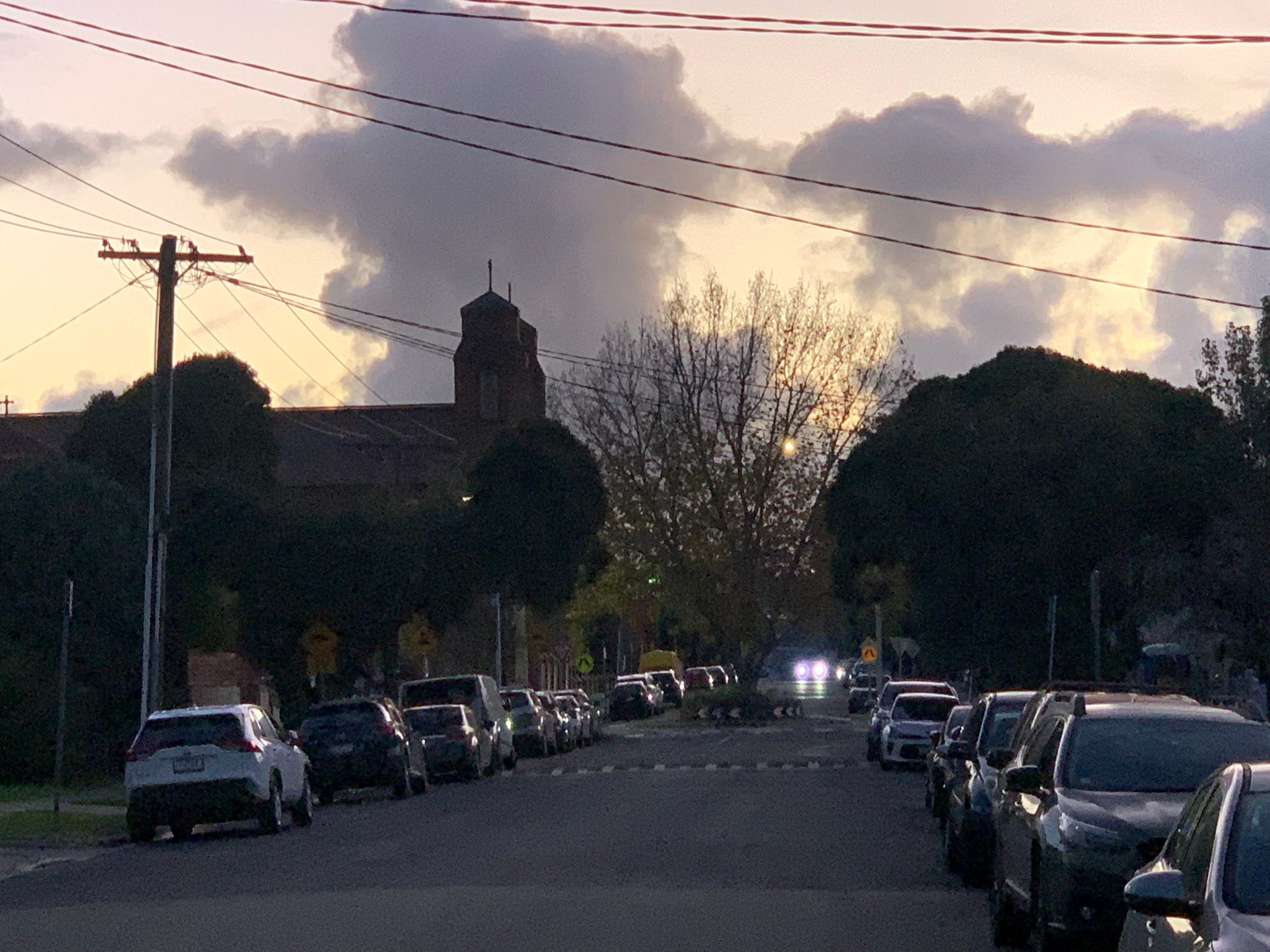
I’ve accessed joy through a journey of contemplation, becoming grounded in the present. Learning to see the beauty in the everyday and being grateful for it. Celebrating in a way, the sky, the green grass, trees, the ducks playing in the pond, a smile from my partner after a day out together, visits from friends, and remembering that the Divine or the Universe is part of every exchange. I think it’s only from this space that I can offer anything meaningful into the dissatisfaction that is so often lapping at the edges, threatening to overwhelm. It’s the only way that I can authentically bring joy.